
Honoring Goddess Baglamukhi: A Path of Protection, Power, and Inner Strength
Among the many divine forms of the Goddess in the spiritual traditions of India, Maa Baglamukhi holds a unique and powerful place. Revered as the embodiment of Brahmastra Shakti—the ultimate force capable of neutralizing negativity—she is worshipped as a fierce protector who grants victory over obstacles, enemies, and unseen adversities.
Her sacred appearance is especially celebrated on her Jayanti (birth anniversary), observed around April 24th, a spiritually charged time when her energy is believed to be most accessible to devotees.
This is a time to seek her blessings for protection, clarity, and strength—not only against external challenges like legal troubles, conflicts, or false accusations, but also against internal struggles such as fear, doubt, and confusion.
The Divine Power of Maa Baglamukhi
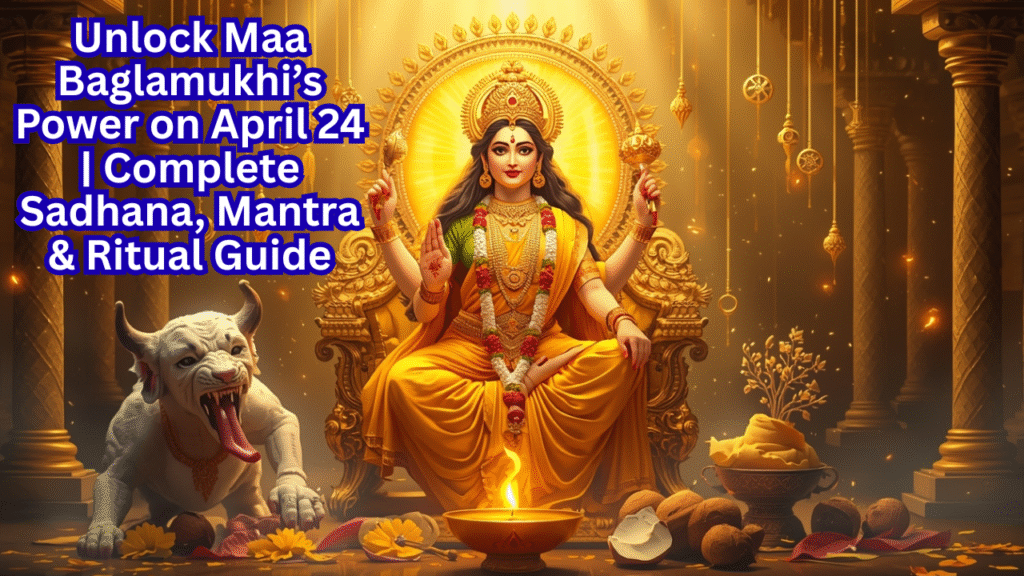
Maa Baglamukhi is often depicted in a striking and symbolic form. She is shown holding the tongue of a demon while raising a weapon in her other hand.
This powerful imagery represents her ability to silence negativity, stop harmful actions, and paralyze destructive forces—whether they come from others or arise within ourselves. She is the force that brings stillness to chaos and clarity to confusion.
Devotees turn to her for:
- Protection from enemies and hidden threats
- Relief from legal or social conflicts
- Strength during difficult life situations
- Enhanced intuition and spiritual awareness
- Control over speech and thought
Her blessings are said to bring not only outer victory but also inner mastery.
Sacred Mantras and Their Practice
At the heart of Baglamukhi worship lies the power of mantra. Even beginners can connect deeply with her energy through simple, sincere chanting.
Seed Mantra (Beej Mantra)
“Hleem” (ह्लीं)
This single syllable carries immense spiritual vibration and is considered the essence of her power.
Full Mantra (36-Syllable Mantra)
A longer, traditional mantra is also chanted by dedicated practitioners for deeper results. Beginners may start with the seed mantra and gradually move to the full mantra as their practice deepens.
Chanting Guidance
- Beginners can start with 1 mala (108 repetitions) daily
- More experienced practitioners may increase to 3, 5, or 11 malas
- Maintain a calm mind and steady rhythm
- Focus on devotion rather than perfection
Consistency and sincerity matter more than speed or complexity.
Preparing for Worship
Baglamukhi worship is closely associated with the color yellow, symbolizing energy, clarity, and divine power.
To prepare:
- Wear yellow clothing
- Sit on a yellow cloth or mat
- Light a ghee lamp, optionally infused with a pinch of turmeric
- Offer yellow items such as turmeric, flowers, sweets, or fruits
These elements help align your energy with the goddess’s vibration.
The Three-Day Sadhana Around Jayanti
A special spiritual practice (sadhana) can be observed over three days:
Day 1 – April 23 (Preparation)
- Clean your space and set your intention
- Take a sankalpa (personal resolve)—a heartfelt statement of your purpose
- Begin chanting with focus and devotion
Day 2 – April 24 (Main Day – Jayanti)
- Increase your mantra chanting
- Perform your worship with full dedication
- Meditate on the goddess’s form and energy
Day 3 – April 25 (Completion)
- Continue chanting
- Offer gratitude
- Conclude your sankalpa with humility and faith
During these three days, maintain a disciplined and positive mindset.
Setting Up the Sacred Kalash
A Kalash (sacred pot) is often स्थापित as a symbol of divine presence.
Steps include:
- Fill a clean pot with water
- Add turmeric, a coin, and sacred leaves if available
- Place a coconut wrapped in yellow cloth on top
This setup becomes a focal point for your prayers and devotion.
Creating Spiritual Protection (Kavach)
During worship, it is beneficial to establish a protective spiritual field around you.
You can do this by:
- Keeping turmeric knots near your पूजा space
- Sprinkling holy water around the area
- Scattering yellow mustard seeds as a symbolic barrier
These practices help create a sense of safety, grounding, and sacredness.
Practical Guidelines for a Focused Practice
To deepen your connection:
- Sit facing east or south during chanting
- Avoid distractions and interruptions
- Maintain purity in thoughts and actions
- Practice self-discipline, including moderation and, if possible, celibacy during the sadhana
- Stay calm, positive, and centered
Your inner state plays a crucial role in the effectiveness of the practice.
Handling Doubts and Social Pressure
Not everyone around you may understand or support your spiritual path—and that’s okay.
Approach your practice with:
- Quiet confidence
- Respect for others’ beliefs
- A focus on your personal connection with the divine
There is no need to argue or convince anyone. True devotion is deeply personal.
Optional Practices for Devotees
For those who wish to go deeper:
- Create a lemon garland as an offering
- Perform a havan (fire ritual) using turmeric and sacred herbs
- Participate in group rituals or temple ceremonies
Even if visiting a temple is not possible, modern tools like the Shri Mandir app allow devotees to connect with temple energies remotely and take part in collective prayers and havans.
A Final Message of Faith and Devotion
Maa Baglamukhi is both a fierce protector and a compassionate mother. Her energy removes obstacles, silences negativity, and empowers those who seek her with sincerity.
This Jayanti, take a moment to pause, reflect, and connect. Whether your practice is simple or elaborate, what truly matters is your intention and devotion.
May her blessings bring you strength in adversity, clarity in confusion, and peace in all aspects of life.
With reverence and devotion:
Jai Maa Baglamukhi 🙏